
From quiet winter evenings to family gatherings around the dining room table, few activities bring people together quite like jigsaw puzzles. They encourage patience, creativity, and problem-solving while offering a welcome break from screens and everyday distractions.
For generations, RGS puzzles have been enjoyed by South African families of all ages, with designs ranging from beginner-friendly challenges to intricate masterpieces for dedicated enthusiasts. Whether you’re choosing your very first puzzle, looking for a rewarding hobby, or searching for the perfect family activity, understanding piece counts, themes, and difficulty levels can make all the difference.
In this guide, we’ll explore what makes RGS puzzles so popular, how to select the right puzzle for every age and experience level, the benefits of puzzling for children and adults, and practical tips for getting the most enjoyment from one of the world’s most timeless pastimes.
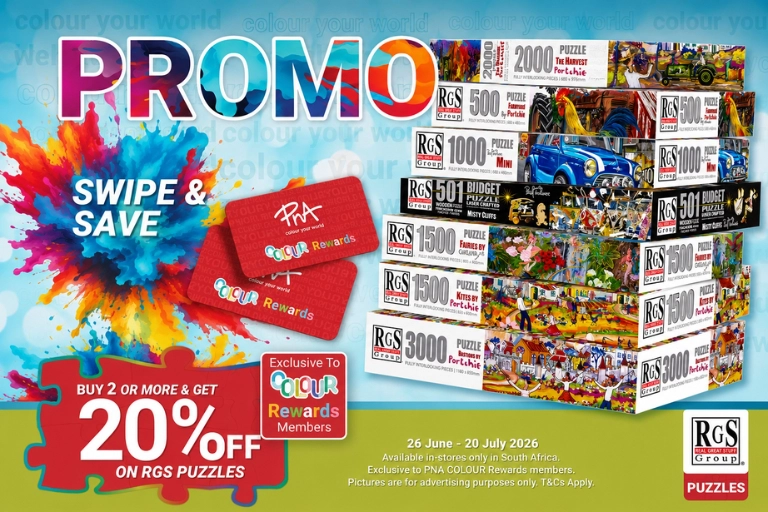
Current Promotion: Save 20% on RGS Puzzles
Planning your next puzzle challenge? Until 20 July 2026, PNA Colour Rewards members can enjoy 20% off when purchasing two or more RGS puzzles in-store.
Whether you’re introducing children to their first jigsaw puzzle or taking on an ambitious 3,000-piece masterpiece, now is the perfect opportunity to expand your collection and discover new designs.
Promotion Details:
- Offer: Buy 2 or more RGS puzzles and save 20%
- Valid: 26 June – 20 July 2026
- Availability: Participating PNA stores nationwide
- Exclusively for: PNA Colour Rewards members
- Terms and conditions apply
This is a limited-time promotion. The remainder of this guide provides timeless advice on choosing, enjoying, and preserving jigsaw puzzles for years to come.
Why Jigsaw Puzzles Continue to Captivate Generations
Few activities bring together creativity, patience, problem-solving, and family connection quite like jigsaw puzzles. From young children developing fine motor skills to adults seeking mindful downtime after busy workdays, puzzles have remained a timeless pastime across generations.
Unlike many modern forms of entertainment, puzzles require focus, collaboration, and persistence. They encourage people to slow down, disconnect from screens, and immerse themselves in a rewarding challenge.
Today, interest in jigsaw puzzles continues to grow, particularly among adults who view puzzling as a relaxing hobby that supports mental wellbeing and reduces stress.
For South African families, RGS puzzles have become a trusted name, offering beautiful artwork, a variety of difficulty levels, and designs suited to both beginners and experienced enthusiasts.
What Makes RGS Puzzles Different?
RGS puzzles have built a loyal following thanks to their distinctive artwork, quality manufacturing, and wide selection of themes.
Whether you’re interested in landscapes, wildlife, vintage vehicles, city scenes, or artistic illustrations, there is an RGS puzzle designed to suit your interests.
Some characteristics that make RGS puzzles popular include:
- High-quality printing and colour reproduction
Rich colours and detailed imagery create a more satisfying and enjoyable puzzling experience. - A wide variety of piece counts
From beginner-friendly 300-piece sets to challenging 3,000-piece masterpieces, there is an option for every skill level. - Designs suitable for all ages
Families can enjoy working together on smaller puzzles, while dedicated hobbyists can tackle more demanding projects over several weekends. - Collectable artwork
Many enthusiasts build collections featuring favourite artists, themes, and memorable designs.
The Surprising Benefits of Completing Puzzles
The popularity of puzzles isn’t simply about entertainment. Research consistently highlights the cognitive and emotional benefits associated with puzzle-solving.
Improved Problem-Solving Skills
Every puzzle presents a unique challenge. Participants must analyse patterns, colours, shapes, and spatial relationships to determine where pieces belong.
These problem-solving skills transfer into everyday life, encouraging patience and analytical thinking.
Better Concentration and Focus
Completing a puzzle requires sustained attention. In a world filled with notifications and distractions, this ability to focus on a single task becomes increasingly valuable.
Many adults describe puzzling as a form of meditation, allowing them to enter a state of calm concentration.
Fine Motor Development in Children
Young children benefit from handling puzzle pieces, improving hand-eye coordination and dexterity while strengthening problem-solving abilities.
Family Bonding
Unlike activities that isolate participants behind individual screens, puzzles encourage conversation, teamwork, and shared achievement.
Families often develop traditions around completing puzzles during school holidays, winter weekends, or festive seasons.
Reduced Stress and Anxiety
Adult puzzles have experienced a surge in popularity because they provide a relaxing escape from daily pressures.
The repetitive nature of sorting, connecting, and assembling pieces can help reduce stress levels while promoting mindfulness.
How to Choose the Right Puzzle Size
Selecting the appropriate puzzle size dramatically impacts enjoyment and success.
300 to 500 Pieces — Perfect for Beginners
These puzzles are ideal for:
- Young children
- Families with limited time
- Casual puzzlers
- Weekend activities
Most can be completed within a single afternoon or evening, making them accessible and rewarding.
1,000 Pieces — The Most Popular Choice
The classic 1,000-piece puzzle strikes an excellent balance between challenge and enjoyment.
Suitable for:
- Adults
- Teenagers
- Families working together
- Regular hobbyists
Depending on experience, completion may take anywhere from several days to several weeks.
1,500 to 3,000 Pieces — For Dedicated Enthusiasts
Large puzzles appeal to those seeking long-term projects.
These intricate designs often become centrepieces within homes and may ultimately be framed as decorative artwork.
Successfully completing a 3,000-piece puzzle provides an immense sense of achievement and requires considerable patience and commitment.
Why Adult Puzzles Have Become One of the Fastest-Growing Hobbies
The growing interest in adult puzzles reflects broader lifestyle trends.
People increasingly seek hobbies that:
- Reduce screen time.
- Promote mindfulness.
- Encourage creativity.
- Improve mental wellbeing.
- Create opportunities for quality family interaction.
Unlike many hobbies, puzzling requires minimal equipment, can be enjoyed alone or socially, and accommodates all experience levels.
For many adults, puzzles represent a welcome opportunity to slow down and engage in meaningful leisure.
Winter evenings, long weekends, and school holidays often become the perfect occasions to begin larger projects.
Tips for Completing Large Jigsaw Puzzles Successfully
Experienced puzzlers often follow proven strategies to improve efficiency and enjoyment.
Start With Edge Pieces
Building the border provides a clear framework and creates smaller, more manageable sections.
Sort Pieces By Colour and Pattern
Organising pieces before beginning saves significant time later.
Separate:
- Sky sections
- Buildings
- Water
- Vegetation
- Distinctive objects
Work in Small Sections
Attempting the entire puzzle simultaneously can feel overwhelming.
Instead, focus on completing individual areas before connecting them together.
Create a Dedicated Puzzle Space
Large puzzles may take days or weeks to finish.
A dedicated table or puzzle board allows progress to continue without constant setup and packing away.
Take Breaks
Stepping away often reveals solutions that weren’t immediately obvious.
Fresh perspectives frequently accelerate progress.
How to Preserve and Frame Completed Puzzles
Many enthusiasts choose to preserve particularly meaningful or beautiful puzzles.
Popular options include:
- Puzzle Glue – Specialised adhesives secure completed puzzles while maintaining colour vibrancy.
- Framing – Large puzzles often become unique pieces of wall art within living rooms, studies, and children’s bedrooms.
- Puzzle Mats – Rolling mats allow unfinished puzzles to be stored safely between sessions.
- Photographing Your Achievement – Document completed projects to build a visual record of memorable family experiences.
Creating Meaningful Family Traditions Around Puzzles
Puzzles can become far more than occasional activities.
Many families establish traditions such as:
- Beginning a new puzzle every winter holiday.
- Completing festive-themed puzzles during December.
- Hosting monthly puzzle nights.
- Working together on large projects over several weekends.
These shared experiences create lasting memories while encouraging collaboration and communication.
Why Jigsaw Puzzles Remain Timeless
Technology continues to evolve, yet the appeal of traditional puzzles remains remarkably strong.
Their enduring popularity stems from their ability to combine challenge, relaxation, creativity, and connection in a single activity.
Whether you’re introducing children to their first 300-piece puzzle or tackling an ambitious 3,000-piece masterpiece, the experience remains deeply rewarding.
For beginners, families, and experienced hobbyists alike, RGS puzzles continue to offer engaging designs and challenges that bring people together while encouraging patience, focus, and imagination.
Frequently Asked Questions
Are RGS puzzles suitable for beginners?
Yes. RGS offers a range of puzzle sizes, including smaller piece counts that are ideal for beginners and families.
What is the best puzzle size for adults?
Most adults begin with 1,000-piece puzzles, which provide an enjoyable balance between challenge and completion time.
How long does it take to complete a 1,000-piece puzzle?
Depending on experience and available time, most people complete a 1,000-piece puzzle within several days to a few weeks.
Are jigsaw puzzles good for mental health?
Many people find puzzles relaxing and therapeutic. They encourage concentration, mindfulness, and stress reduction.
Can completed puzzles be framed?
Absolutely. Puzzle glue and custom framing solutions allow completed puzzles to become unique decorative pieces.