What Is an Asset?
An asset is something that has value and is expected to provide future economic benefits to a business.
Examples of business assets include:
- Cash
- Equipment
- Computers
- Furniture
- Vehicles
- Inventory
Assets are generally items that a business owns and can use over a period of time.
Is Stationery an Asset?
In most cases, stationery is treated as an operating expense rather than an asset.
This includes items such as:
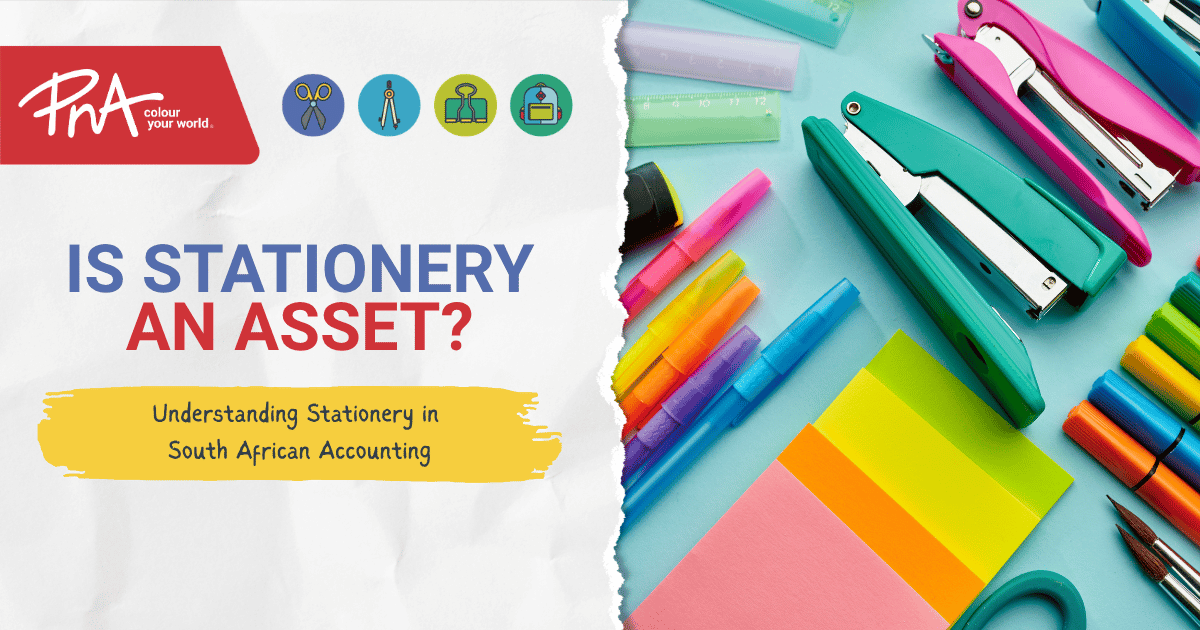
- Pens
- Pencils
- Notebooks
- Printer paper
- Sticky notes
- Highlighters
- Filing products
Because these items are consumed during day-to-day business operations, they are usually recorded as stationery expenses in the accounting records.
Why?
👉 Stationery is generally used up over time and does not provide long-term economic value in the same way as equipment or furniture.
When Can Stationery Be Considered an Asset?
There are situations where stationery may temporarily be treated as an asset.
For example:
A business purchases R10,000 worth of stationery at the end of the financial year.
If a significant portion remains unused, it may be recorded as stationery on hand (inventory) until it is consumed.
Once the stationery is used, the value is transferred to an expense account.
This approach helps businesses accurately match expenses to the period in which they are incurred.
Stationery vs Office Equipment
Many people confuse stationery with office equipment.
Stationery Examples
- Pens
- Markers
- Printer paper
- Notebooks
- Envelopes
- Sticky notes
Office Equipment Examples
- Printers
- Laptops
- Desktops
- Office furniture
- Laminators
- Binding machines
Office equipment is generally treated as an asset because it is expected to be used for several years.
Why Is This Important for Businesses?
Correctly categorising expenses helps businesses:
- Maintain accurate financial records
- Prepare financial statements correctly
- Manage budgets more effectively
- Track operational costs
- Meet accounting and tax requirements
Whether you’re running a small business, managing a school office, or purchasing supplies for a large organisation, understanding how stationery is classified can improve financial decision-making.
Frequently Asked Questions
Is stationery an asset or an expense?
In most cases, stationery is treated as an operating expense because it is consumed during normal business activities.
Can stationery ever be an asset?
Yes. Unused stationery may sometimes be recorded as stationery on hand or inventory until it is used.
Is printer paper an asset?
Generally no. Printer paper is usually classified as a stationery expense.
Are office supplies assets?
Most office supplies are treated as expenses. However, durable equipment such as printers and computers are typically classified as assets.
Is a notebook considered an asset?
A notebook purchased for normal business use is usually classified as a stationery expense.
Stock Up on Office and Business Stationery
Whether you’re purchasing stationery for your home office, school, or business, having the right supplies helps keep work organised and productive.
PNA offers a wide range of office stationery, business supplies, filing products, notebooks, pens, printer paper, and workplace essentials to support businesses of every size.