By mid-term, learners are ready for something hands-on, teachers are looking for manageable classroom activities, and parents want creative projects that do not involve a full living-room renovation.
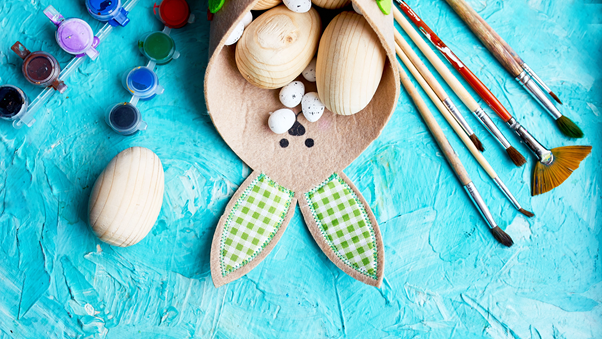
The good news is that Easter art ideas do not need to be complicated to be meaningful. With simple materials like coloured cardstock, acrylic paint, glue sticks and art paper (all easy to find at PNA) you can create Easter classroom activities that feel structured, achievable and genuinely joyful.
Here is how to approach a few tried-and-tested favourites in a way that works for real classrooms and real homes.
Building a Paper Plate Bunny That Actually Looks Like a Bunny
Paper plate crafts are popular for a reason. They are sturdy, affordable and easy for little hands to manage. But the key to making them successful is thinking about construction before decoration.
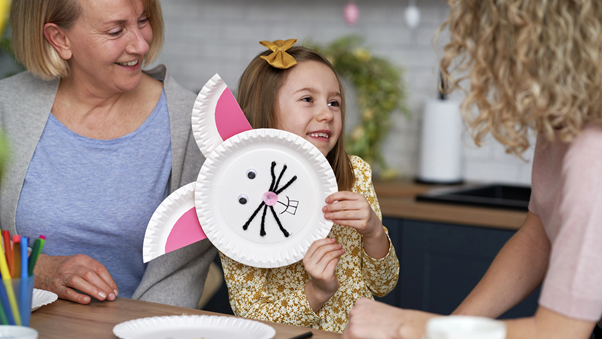
Start by painting the entire front of the paper plate white or a soft pastel using acrylic or poster paint. While it dries, cut two long oval ear shapes from white cardstock. Then cut slightly smaller pink inner-ear pieces and glue them on top. This layering step gives dimension and helps children understand basic shape relationships.
Once the plate is dry, glue the ears securely to the back top edge so they sit upright. Add googly eyes or draw eyes with a permanent marker. A small triangle nose in the centre and whiskers extending outwards bring the face together.
Instead of randomly sticking cotton wool somewhere, use it intentionally. A small cotton wool ball glued just below the nose creates a soft bunny muzzle.
This Easter craft builds cutting skills, layering, shape recognition and controlled painting, all while staying completely manageable.
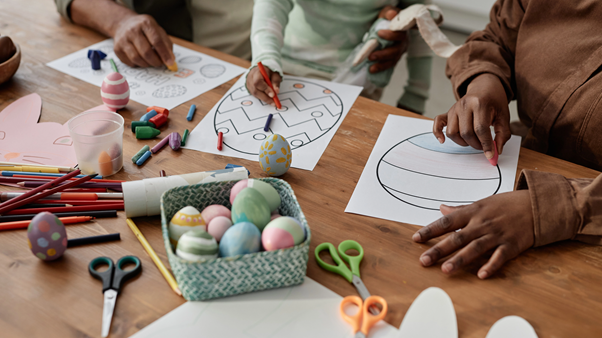
Textured Easter Egg Collages That Teach More Than Colouring In
If you are looking for Easter classroom activities that develop fine motor skills, textured egg collages are ideal.
Lightly draw large egg shapes onto A3 art paper from your PNA drawing pad. Rather than handing out scissors immediately, encourage children to tear coloured craft paper and tissue paper into small pieces. Tearing strengthens finger control and is often easier for younger learners than precise cutting.
Divide the egg into horizontal sections with light pencil lines. This gives structure without limiting creativity. Children can then fill each section using different colours or materials, layering torn paper with felt sheets or fabric scraps for added texture.
This approach transforms a simple Easter art project into an exploration of contrast, pattern and composition. Dark next to light. Smooth next to textured. Small pieces next to larger shapes.
It feels playful, but it quietly builds foundational art skills.
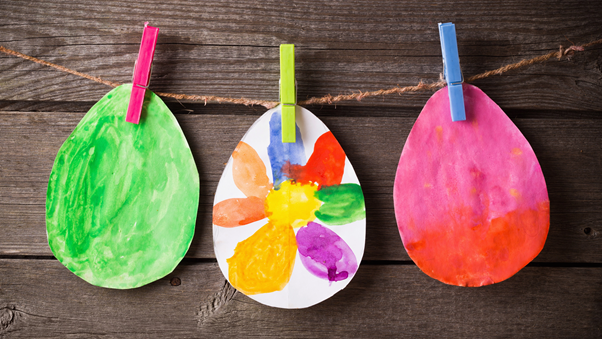
Sponge-Painted Easter Eggs for Instant Impact
Sponge painting is one of the easiest Easter painting ideas for Foundation Phase learners because it reduces brush control issues and creates bold results quickly.
Cut egg shapes from thick white cardstock. Pour small amounts of pastel acrylic paint into shallow trays. Demonstrate how to dip the sponge lightly into the paint and dab rather than drag it across the surface. Dragging blends colours too quickly and creates muddy tones, which is usually where frustration begins.
Layer one colour at a time and allow brief drying between layers. Once dry, simple patterns can be added with markers or fine paintbrushes.
Because you are working with thicker paper and controlled paint amounts, the mess stays manageable and the outcome looks vibrant enough to decorate a full classroom wall.
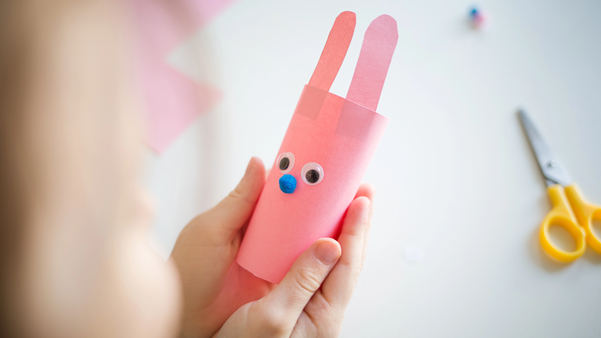
Toilet Roll Easter Bunnies: A Proper 3D Craft Kids Love
If you want an Easter craft for kids that feels slightly more exciting than flat paper decorating, toilet roll bunnies are a classic for a reason. They are simple to construct, use mostly recycled materials, and give children something they can actually hold and play with afterwards.
Start with empty toilet roll tubes. Cover the outside of each roll with pastel coloured paper or paint it using acrylic or poster paint. If painting, allow it to dry fully before moving on. This prevents smudging and sticky fingers later on.
For the ears, cut two long oval shapes from coloured cardstock. If you want extra detail, glue smaller pink inner-ear shapes on top. Instead of attaching the ears flat, gently fold a small tab at the bottom of each ear and glue that tab to the inside of the roll so the ears stand upright. This small construction detail makes a big difference to the final look.
Next, add the face. Googly eyes are always a hit, but drawn eyes work just as well. A small pom pom or cotton wool ball makes a great nose. Whiskers can be drawn with marker or created using thin strips of black paper glued flat against the roll.
If you want to extend the activity, add simple details like:
- A cotton wool tail glued to the back
- A paper bow tie
- Tiny drawn paws at the base
This Easter classroom activity works particularly well because it combines measuring, cutting, folding and gluing in a structured way. Children learn that the roll is not just something to decorate but something to construct.
The best part? Once complete, the bunnies can sit on desks, line a classroom shelf, or become part of a small Easter display. It is not just art. It is something they have built.
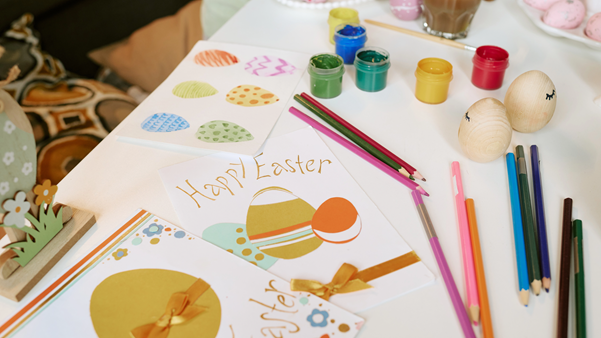
Happy Easter!
These are just a handful of Easter crafts for kids to get you started. Paper plate bunnies, textured egg collages, sponge-painted designs and toilet roll Easter bunnies are simple, manageable projects that work beautifully in both classrooms and at home. But they are only the beginning.
Once you have the basics in place, coloured cardstock, acrylic paint, art pads, glue sticks, child-friendly scissors, pom poms, felt sheets, craft paper and embellishments, the possibilities really are endless. Easter art activities can grow into card-making, classroom displays, mixed-media projects, collaborative murals or even simple handmade gifts.
With the right supplies from PNA and a little planning, Easter classroom activities become less about managing mess and more about creating moments. Moments where children experiment, problem-solve, build confidence and proudly hold up something they made themselves.