

If you’ve ever bought a beautiful notebook only to leave the first page blank because you didn’t know what to write, you’re not alone.
Many people want to start journaling but feel overwhelmed by the idea of writing pages of thoughts every day. The truth is that journaling doesn’t need to be complicated.
A journal can help you organise your thoughts, track goals, manage stress, improve creativity, and reflect on your experiences. Best of all, you only need a notebook, a pen, and a few minutes each day to get started.
The ideas below are beginner-friendly and designed to help you start writing today.
What Do You Need to Start Journaling?
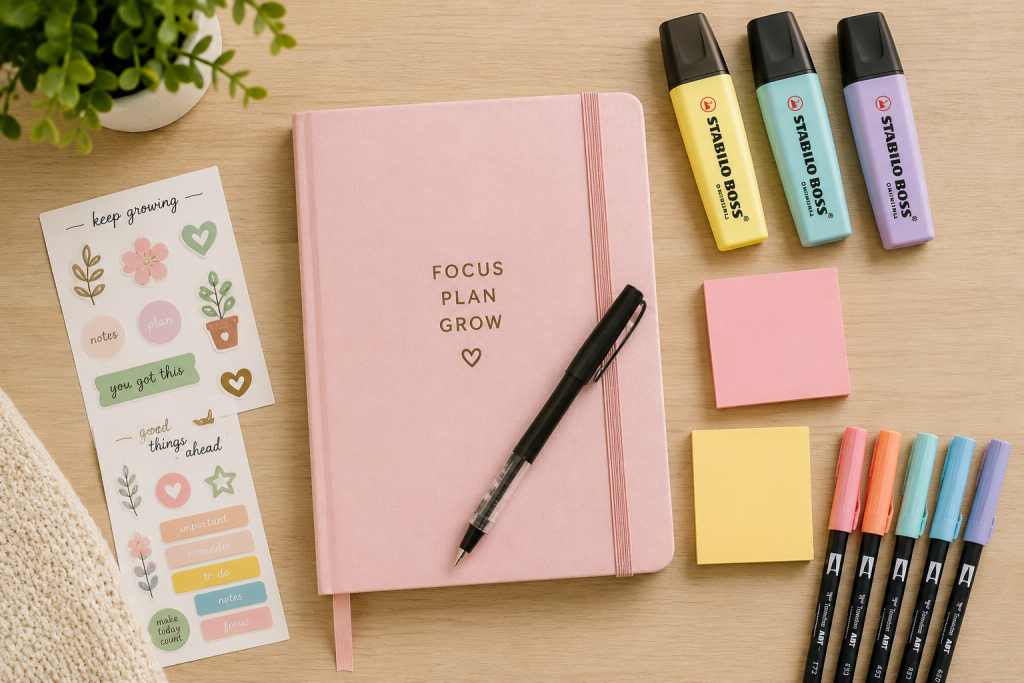
Essentials
- A notebook or journal
- A comfortable pen
Optional Extras
- Highlighters
- Sticky notes
- Washi tape
- Stickers
- Coloured pens
Why It Works
👉 Removing unnecessary complexity makes it easier to start.
1. The 3-Minute Journal Method
If you’ve never kept a journal before, this is the perfect place to start. The goal isn’t to write a masterpiece, it’s simply to create a moment of reflection in your day.
Some mornings you’ll have lots to say, and other days you may only write a few words. Both are perfectly okay. The important thing is showing up and building the habit one day at a time.
How to Create It
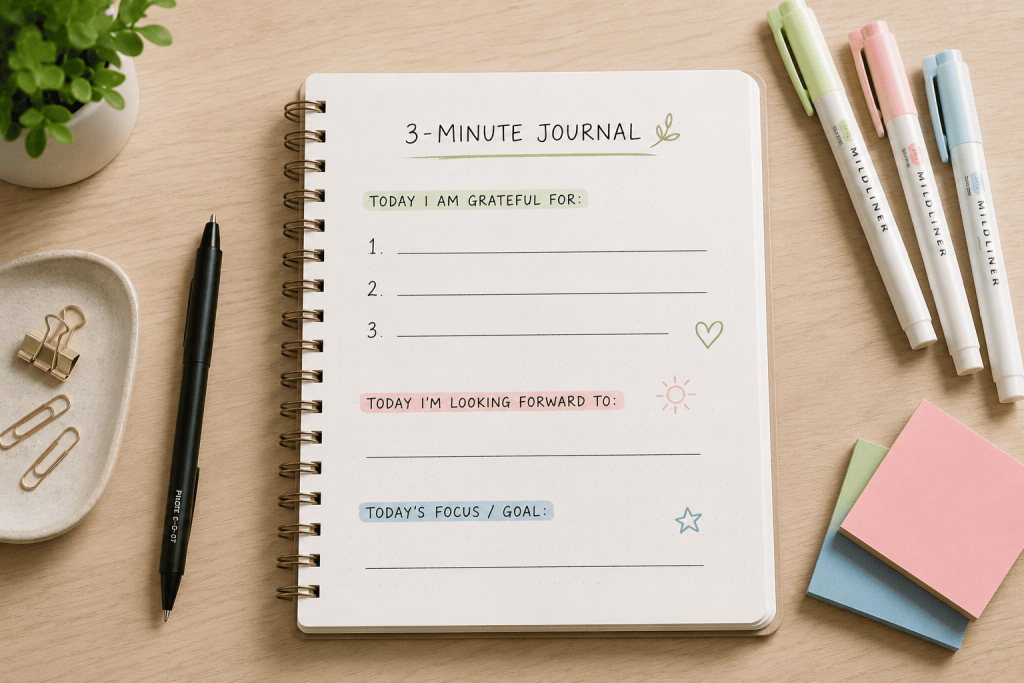
Write down:
- Three things you’re grateful for
- One thing you’re looking forward to
- One goal for the day
Why It Works
👉 Takes less than three minutes and helps build consistency.
Many people think journaling requires pages of writing and deep self-reflection. In reality, some of the most effective journaling habits are also the simplest.
The 3-Minute Journal removes the pressure of having to write a lot and makes it easy to build a habit that you can stick to.
Whether you complete it first thing in the morning or before going to bed, these small daily reflections can help you develop a more positive mindset and become more intentional with your time.
Here’s what a simple 3-Minute Journal page might look like:
2. The Brain Dump Journal
Think of a Brain Dump Journal as a way to clear your mental inbox. Instead of trying to organise your thoughts, tasks, worries, and ideas, you simply get them out of your head and onto paper.
This journaling method is especially helpful when you’re feeling overwhelmed, distracted, stressed, or struggling to focus. By writing everything down, you free up mental space and make it easier to concentrate on what truly matters.
How to Create It
- Open your journal to a blank page
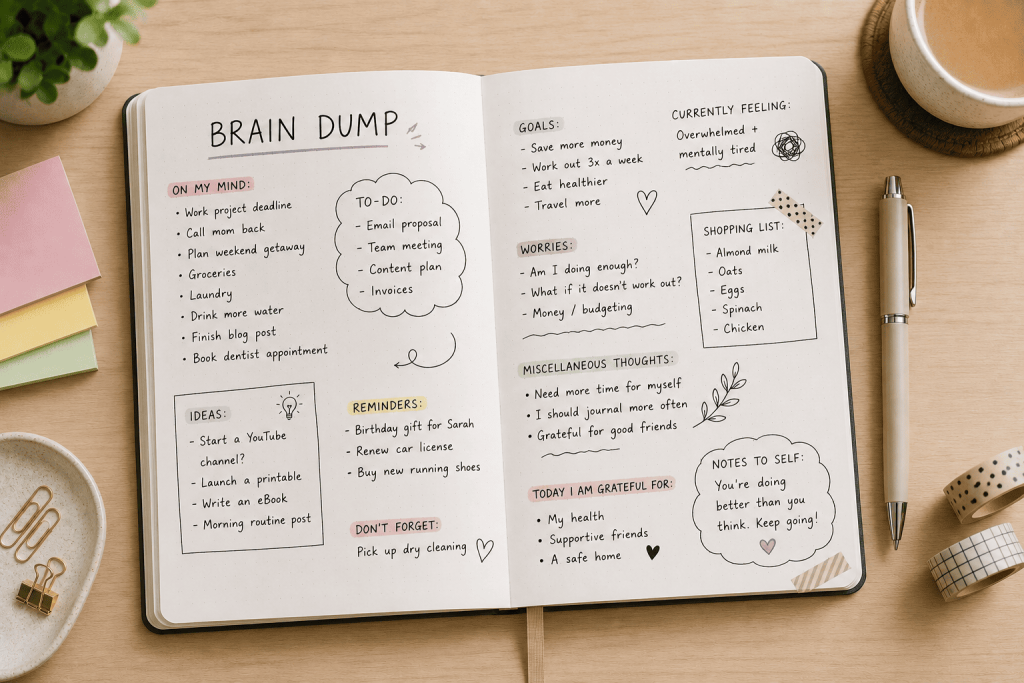
- Write down everything that’s on your mind
- Include tasks, worries, ideas, reminders, goals, or random thoughts
- Don’t worry about grammar, spelling, or structure
- Keep writing until you feel lighter and clearer
Why It Works
👉 Helps reduce mental clutter and improve focus.
One of the biggest benefits of a Brain Dump Journal is that there are no rules. You don’t need complete sentences, neat handwriting, or perfectly organised thoughts. This is a private space where you can be completely honest with yourself.
Some days your page might be filled with to-do lists and reminders. Other days it may contain worries, exciting ideas, goals, or things you simply don’t want to forget. The purpose isn’t to create something beautiful, it’s to create clarity.
Many people find that once their thoughts are on paper, problems feel more manageable and priorities become easier to identify.
Here’s what a Brain Dump Journal page might look like:
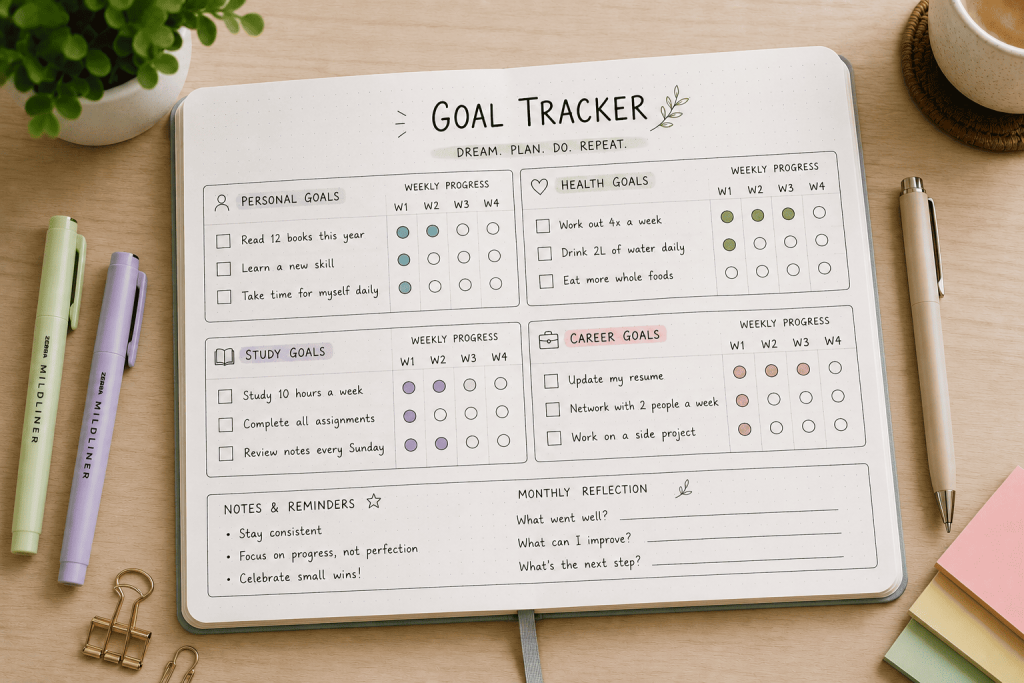
3. The Goal Tracker Journal
A Goal Tracker Journal helps turn ideas and ambitions into clear, actionable plans. Instead of keeping your goals in your head and hoping you’ll remember them, you create a dedicated space to track your progress and celebrate the small wins along the way.
Whether you’re working towards personal growth, better health, improved study habits, or career success, seeing your goals written down can help keep you motivated and focused.
How to Create It
Divide a page into categories such as:
- Personal Goals
- Health Goals
- Study Goals
- Career Goals
Under each category, write down specific goals and create a simple way to track your progress. This could be checkboxes, weekly trackers, progress circles, or milestones that you can update regularly.
Why It Works
👉 Helps turn goals into actionable plans.
Many goals fail because they remain ideas rather than becoming part of a routine. A Goal Tracker Journal creates accountability by keeping your objectives visible and reminding you of the progress you’re making.
It’s also a great way to break larger goals into smaller, manageable steps. Instead of focusing on the finish line, you can concentrate on the actions you need to take each week to move forward.
Remember, progress is often built through small, consistent efforts rather than dramatic changes. Even ticking off one task or completing one milestone can create momentum and help you stay motivated.
4. The Gratitude Journal
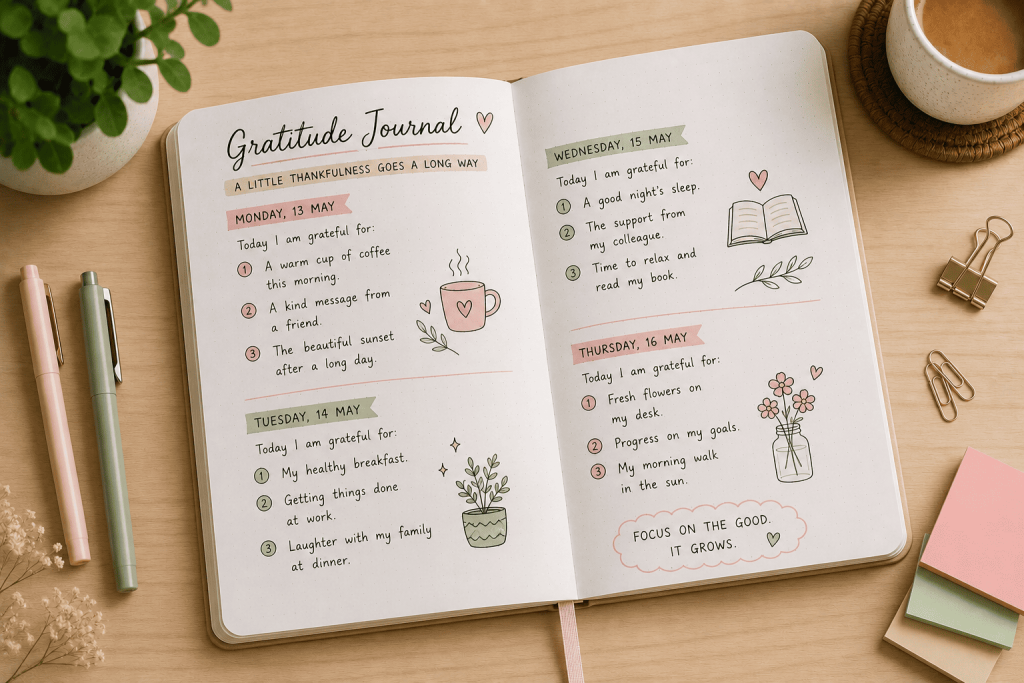
A Gratitude Journal encourages you to slow down and notice the good things that often go unnoticed in the rush of everyday life. These don’t have to be major life events — sometimes the smallest moments can have the biggest impact.
A warm cup of coffee, a kind message from a friend, a beautiful sunset, or simply making progress on a goal are all worth celebrating.
By taking a few minutes each day to reflect on what you’re grateful for, you can shift your focus towards the positive experiences that already exist in your life.
Over time, many people find that this simple habit helps them develop a greater sense of appreciation, positivity, and perspective. The more you practise gratitude, the easier it becomes to recognise the good moments, both big and small.
How to Create It
- Write down three things you’re grateful for every day
- Include both big and small moments
- Be specific
Why It Works
👉 Encourages positive thinking and reflection.
Here’s what a Gratitude Journal page might look like:
5. The Dream Journal
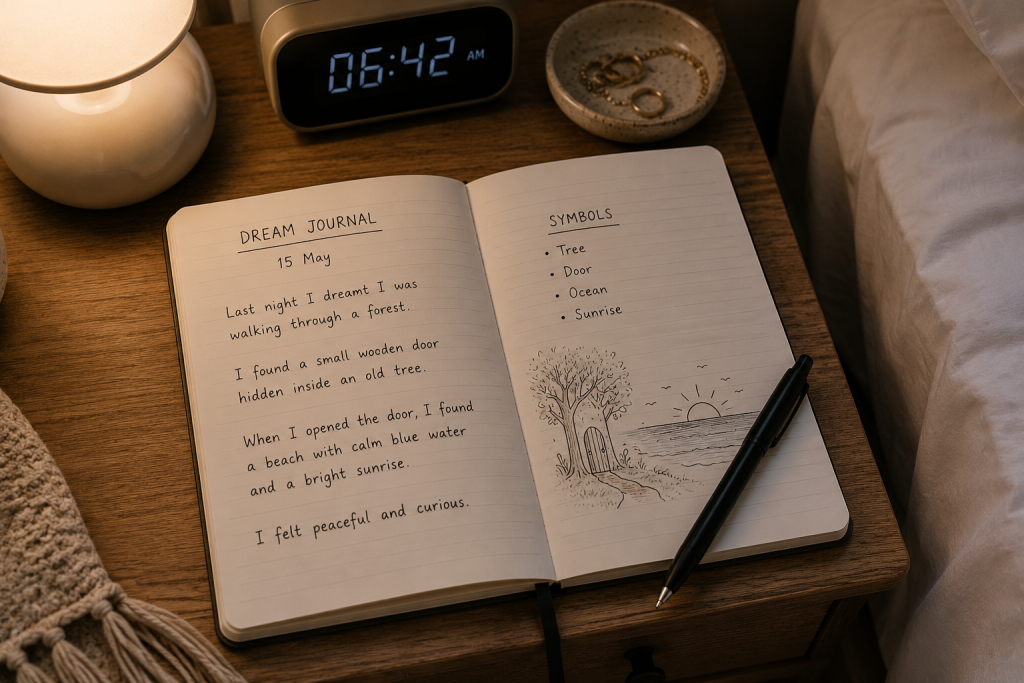
A Dream Journal is a fascinating way to capture the thoughts, stories, emotions, and symbols that appear while you sleep. Because dreams can fade quickly after waking, keeping a journal nearby allows you to record details before they disappear.
You don’t need to write down every detail perfectly. Simply capture what you remember, whether it’s a place, a conversation, a feeling, a person, or even a single image that stood out.
Over time, you may start to notice recurring themes, symbols, or patterns that you hadn’t recognised before.
Many people enjoy keeping a Dream Journal because it encourages reflection and creativity. Some dreams may be meaningful, while others may simply be entertaining or unusual. Either way, recording them can become an enjoyable part of your morning routine.
How to Create It
- Keep your journal next to your bed
- Write down dreams immediately after waking
- Record emotions, people, places, and symbols
Why It Works
👉 Helps improve dream recall and self-reflection.
Here’s what a Dream Journal page might look like:
6. The Study Journal
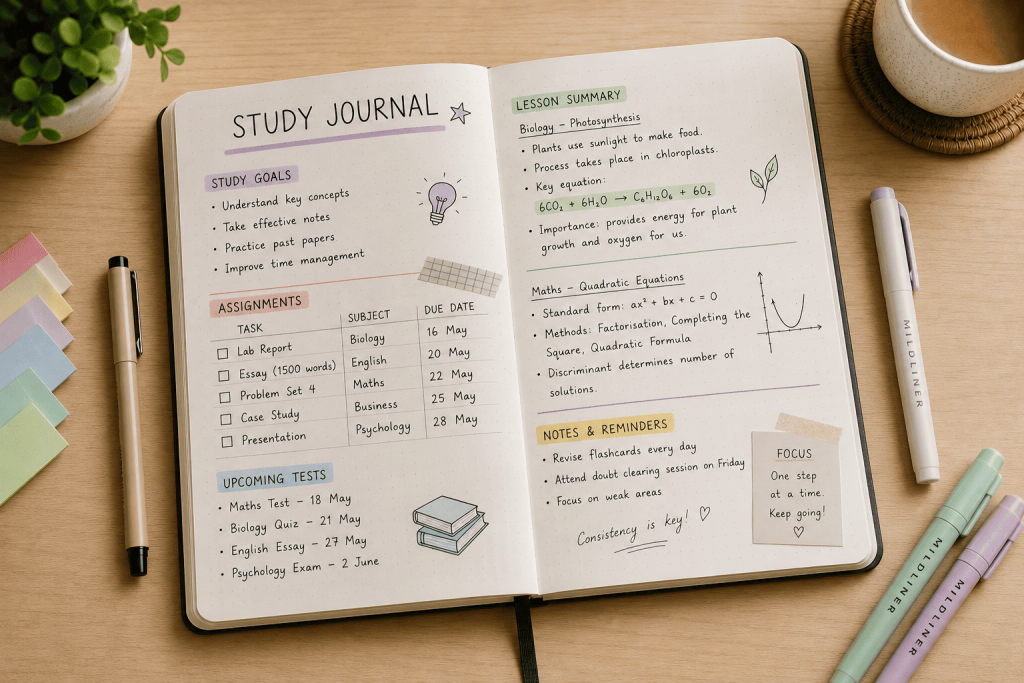
A Study Journal is a practical way to keep all your academic goals, notes, assignments, and deadlines in one place. Rather than relying on memory or scattered notes across multiple notebooks and devices, a study journal helps you create a clear system that supports your learning.
It can be used to track assignments, summarise lessons, plan revision sessions, record important deadlines, and monitor your progress throughout the school term.
Having everything organised in one place makes it easier to stay on top of your workload and reduces the stress of forgetting important tasks.
A Study Journal is also a great tool for building productive study habits. By regularly reviewing your goals and tracking your progress, you can identify areas that need more attention and celebrate the improvements you make along the way.
Remember, studying isn’t just about working harder, it’s about working smarter. A few minutes spent organising your notes and planning your week can save hours of confusion and last-minute cramming later on.
How to Create It
- Write down study goals
- Track assignments
- Summarise lessons learned
- Record upcoming tests and deadlines
Why It Works
👉 Helps students stay organised and focused.
Here’s what a Study Journal page might look like:
7. The Creative Journal
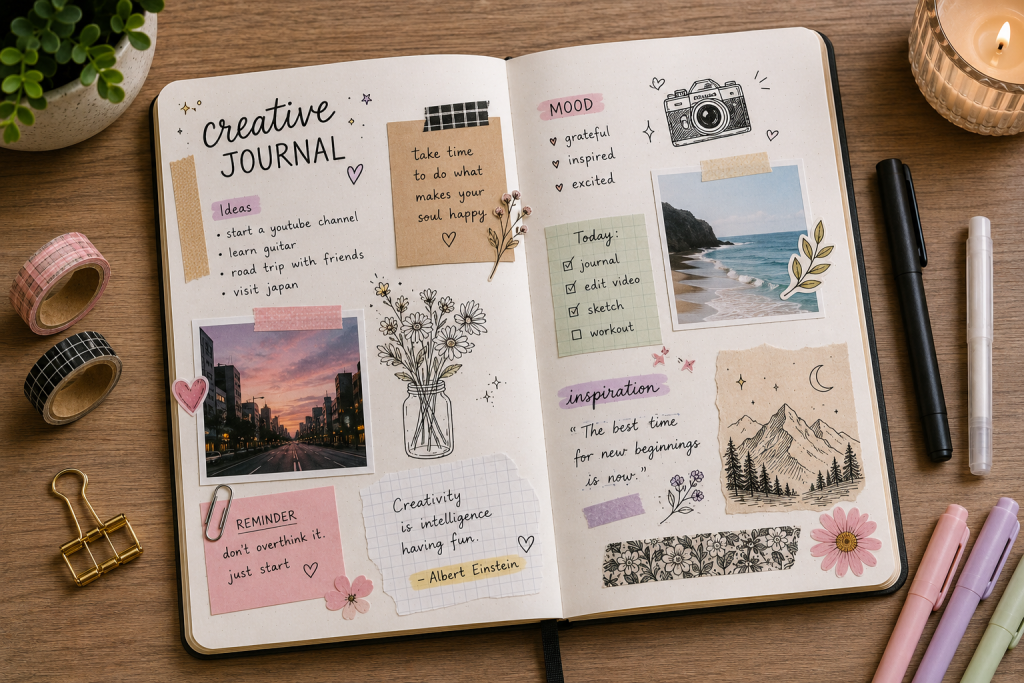
A Creative Journal is all about self-expression. Unlike traditional journals that focus mainly on writing, a creative journal gives you the freedom to combine words, images, colours, sketches, quotes, photographs, and memories in a way that feels meaningful to you.
There are no rules and no right or wrong way to do it. Some pages may be filled with drawings and doodles, while others might include inspirational quotes, travel memories, magazine cut-outs, photographs, stickers, or ideas for future projects.
The goal is simply to create something that reflects your personality and interests.
Many people enjoy creative journaling because it feels less structured and more playful than traditional journaling. It can be a wonderful way to unwind, spark creativity, preserve special memories, and explore new ideas without the pressure of creating something perfect.
The best part is that every creative journal is unique. Your pages can evolve over time and become a collection of thoughts, experiences, inspiration, and moments that are special to you.
How to Create It
- Add sketches and doodles
- Use stickers and washi tape
- Include quotes and inspiration
- Add photographs or mementos
Why It Works
👉 Makes journaling more enjoyable and personal.
Common Beginner Journaling Mistakes
When starting out, try to avoid these common mistakes:
Trying to Write Too Much
Start small. A few sentences is enough.
Missing One Day and Giving Up
Consistency matters more than perfection.
Comparing Your Journal to Social Media
Your journal is for you, not for anyone else.
Worrying About Handwriting
Focus on your thoughts, not how they look.
30 Journal Prompts for Beginners
Not sure what to write about? Try these prompts:
- What made me smile today?
- What am I grateful for right now?
- What challenge did I overcome recently?
- What does my ideal day look like?
- What am I most excited about this month?
- What is one thing I want to improve?
- What am I proud of?
- What inspires me?
- What are my biggest goals?
- What am I currently learning?
- What helps me feel calm?
- What is something I want to let go of?
- What does success mean to me?
- What would I tell my younger self?
- What are my strengths?
- What motivates me?
- What have I learned this year?
- What makes me happy?
- What would I do if I wasn’t afraid?
- What is one thing I want to achieve this week?
- What does a balanced life look like?
- What is currently causing me stress?
- What am I avoiding?
- What habits would I like to develop?
- What do I value most?
- What is my favourite memory?
- What am I curious about?
- What does confidence mean to me?
- What do I want more of in my life?
- What am I looking forward to tomorrow?
Find Your Perfect Journal at PNA
Ready to start your journaling journey?
Visit PNA to explore our range of journals, notebooks, pens, highlighters, sticky notes, stickers, and stationery accessories.
Whether you’re starting a gratitude journal, study journal, dream journal, or creative journal, you’ll find everything you need to begin.
👉 Browse PNA’s stationery range today.
Tips for Building a Journaling Habit
To make journaling part of your daily routine:
- Start with just 5 minutes a day
- Journal at the same time each day
- Keep your journal somewhere visible
- Don’t aim for perfection
- Focus on consistency
- Make journaling enjoyable
Why Journaling Is Worth Trying
Journaling is more than simply writing things down.
It can help you:
- Reduce stress
- Improve focus
- Clarify goals
- Build self-awareness
- Track progress
- Encourage creativity
- Reflect on experiences
Whether you’re a student, professional, parent, or creative thinker, journaling is a simple habit that can have a lasting impact.
Frequently Asked Questions
How do I start journaling if I don’t know what to write?
Start with simple prompts or write about your day. The goal is simply to begin.
How often should I journal?
Daily journaling is helpful, but even a few entries each week can be beneficial.
What should I write in my first journal?
Write about your day, your goals, your thoughts, or something you’re grateful for.
Do I need a special journal?
No. Any notebook can be used as a journal.
Is journaling good for mental well-being?
Many people find journaling helps them process thoughts, reduce stress, and improve self-reflection.
Can students benefit from journaling?
Absolutely. Journaling can help students stay organised, manage stress, and track academic goals.